

goldenagehk
Green Sahara Hoodie
Green Sahara Hoodie
Couldn't load pickup availability
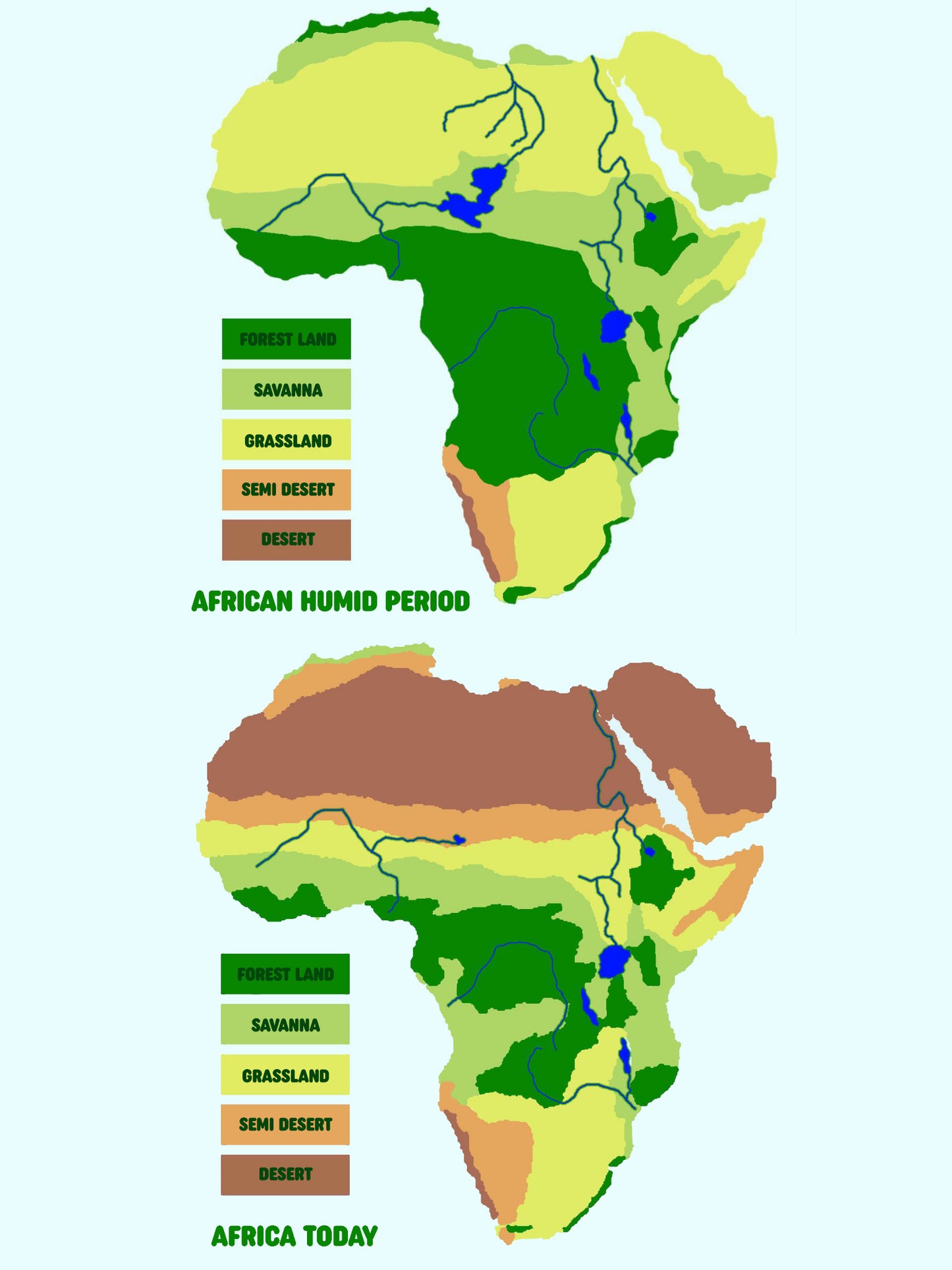
A 1 of 1, hand made heavyweight cotton hoodie in yellow, green and blue. The colors represent the Green Sahara period – the desert sand, ancient grasslands, and prehistoric lakes that once covered North Africa.
The hoodie is 100% heavyweight cotton and provides great insulation, perfect for winter in the cold desert.
Size Guide
1 of 1, available in M size only.
When the Sahara was green - The African Humid Period
Today, the Sahara desert covers almost all of North Africa and is one of the most inhospitable places on the planet, but it wasn't always like this.
The Green Sahara, also known as the African Humid Period, occurred from around 15,000 to 5,000 years ago, when the Sahara Desert was made up of grasslands, lakes, and rivers. Changes in the Earth's orbit transformed the region into a thriving ecosystem that supported diverse wildlife and allowed early human civilization to grow.
Driven by changes in Earth's orbital patterns, monsoon rains swept across the Sahara, creating vast networks of rivers and mega lakes. Lake Mega-Chad expanded to over 400,000 square kilometers, larger than the modern Caspian Sea, sustaining fishing communities and wildlife.
Archaeological evidence proves that human societies flourished during this period, developing farming, herding, pottery and early forms of written language.
The region supported megafauna including elephants, giraffes, hippos, and crocodiles, while grasslands and wetlands stretched across what are now barren dunes in Libya, Chad, Niger, Mali, and Mauritania.
The origins of Ancient Egypt
Materials
Materials
100% Cotton
Dimensions
Dimensions
XL - length 72cm, width 58cm, sleeve (CB) 84cm